
World Disability Union and UN Tourism
Explore Cooperation to Advance
Accessible Tourism in Sharjah
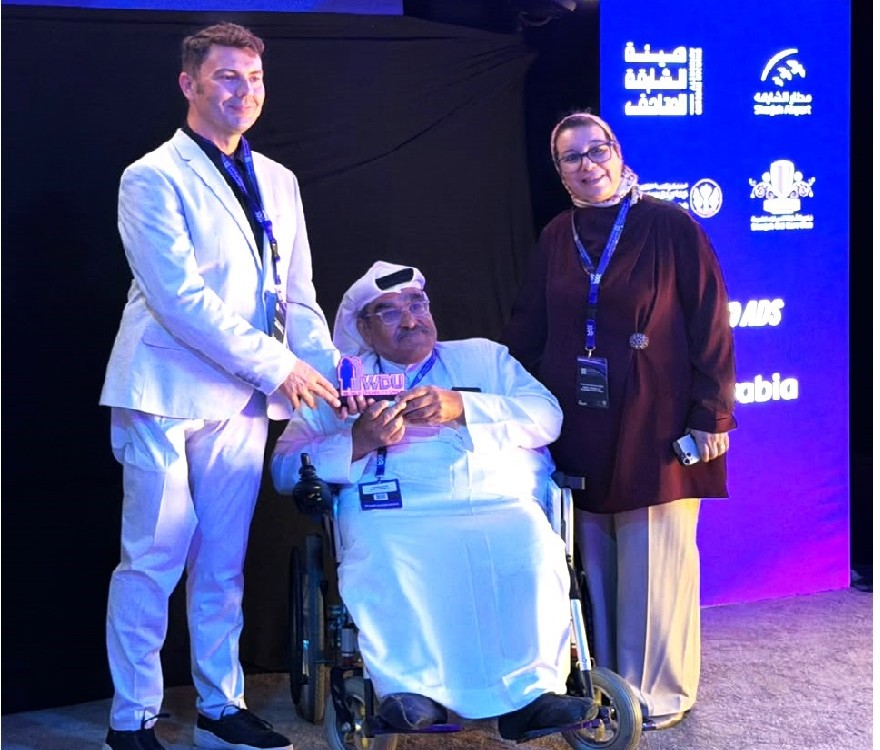
Sharjah, United Arab Emirates — The World Disability Union
(WDU) held a meeting with UN Tourism during the International Tourism Forum in
Sharjah, organized under the auspices of the Sharjah Commerce and Tourism
Development Authority. The meeting focused on advancing accessible tourism for
persons with disabilities and exploring opportunities for future cooperation to
make travel and tourism more inclusive, accessible, and convenient for all.
The meeting brought together H.E Heidar Talleb, Secretary-General of the World Disability
Union, and Mr. Igor Stefanovic, Technical Coordinator of the Ethics, Culture
and Social Responsibility Department at UN Tourism, to discuss practical
approaches to improving accessibility throughout the tourism sector.
WDU Presents Its Global Accessible Places Certification
Programme
During the meeting, H.E. Haidar Talib highlighted the World
Disability Union’s efforts to promote accessibility and inclusion through its
international certification programme for accessible places. The programme aims
to recognize and encourage facilities that meet accessibility requirements,
including hotels, airports, transportation facilities, and other
tourism-related establishments.
H.E. Talib explained that accessible infrastructure and
services are essential to enabling persons with disabilities to travel
independently, comfortably, and with dignity. He emphasized the importance of
encouraging tourism operators and service providers to improve their facilities
and services, helping ensure that accessibility becomes an integral part of the
visitor experience.
Founded in 2011, the World Disability Union has developed an
international network comprising more than 400 affiliated entities across 91
countries, according to its official website. Through its global activities,
the Union works to advance disability rights, promote universal accessibility,
and support the development of more inclusive environments in line with the
principles of the United Nations Convention on the Rights of Persons with
Disabilities.
UN Tourism Highlights Opportunities for Future Collaboration
Mr. Igor Stefanovic welcomed the discussion on accessible
tourism and explored the potential for future cooperation between UN Tourism
and the World Disability Union. The discussion emphasized the importance of
strengthening international collaboration and identifying practical initiatives
that can make tourism destinations, facilities, and services more accessible to
persons with disabilities.
UN Tourism has consistently highlighted accessibility as a
fundamental component of responsible and sustainable tourism. Its work in this
field promotes improved access to tourism infrastructure, transportation,
information, and services, while encouraging tourism stakeholders to consider
the diverse needs of visitors. Its recommendations on accessible tourism also
provide guidance for destinations and businesses seeking to improve
accessibility throughout the tourism value chain.
The meeting provided an opportunity to exchange perspectives
on how the expertise and international reach of both organizations could
contribute to advancing accessible tourism. Potential areas for future
collaboration include promoting accessibility standards, raising awareness
among tourism operators, encouraging the development of accessible facilities,
and supporting initiatives that enable persons with disabilities to enjoy
tourism experiences on an equal basis with others.
Making Tourism More Inclusive for Everyone
Accessible tourism extends beyond the provision of ramps or
wheelchair-accessible facilities. It encompasses the entire travel experience,
including transportation, accommodation, public spaces, tourist attractions,
communication, and access to reliable information. Ensuring accessibility
across these elements is essential to allowing persons with different
disabilities to participate fully in tourism and cultural activities.
Cooperation between international organizations, tourism
authorities, hospitality providers, transport operators, and disability
organizations can play an important role in identifying barriers and developing
practical solutions. International certification programmes can also help raise
awareness of accessibility requirements and encourage tourism businesses to
demonstrate their commitment to inclusive services.
A Shared Vision for the Future
The meeting in Sharjah represents a constructive step in the
dialogue between the World Disability Union and UN Tourism on the future of
accessible tourism. By exploring opportunities for cooperation, both
organizations can contribute to a broader international effort to remove
barriers, promote universal accessibility, and improve tourism experiences for
persons with disabilities.
The World Disability Union reaffirmed the importance of
continuing to engage with international partners and tourism stakeholders to
advance accessibility and inclusion. The discussion also underscored the value
of bringing together international expertise and practical certification
initiatives to help tourism destinations become more welcoming and accessible.
The shared objective is clear: to help build a tourism sector
in which accessibility is recognized as an essential element of quality,
sustainability, and equal opportunity, enabling persons with disabilities to
travel, explore, and experience the world with greater independence and
confidence.